
K-Pop Girls' Chakra Timeline

 운영자
운영자
본문
K-Pop Girls' Chakra Timeline
Tracing the luminous arc of an early-2000s group that reframed pop with spirit, sound and stagecraft.
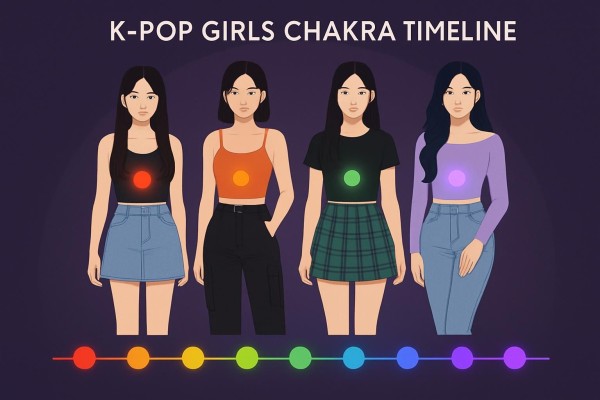
In the constellation of early K-pop girl groups, Chakra occupied a distinctive orbit. Known for a production palette that borrowed freely from global musical traditions and for a stage persona that balanced mystery with charisma, the group carved a niche that resonated with audiences hungry for something beyond standard idol formulas. This feature takes a panoramic view — a timeline — of Chakra's lifecycle: emergence, ascent, moments of metamorphosis, and the afterlives of its members and music.
Highlight: their aesthetic choices often mixed Eastern and South Asian motifs with pop choreography, creating an instantly recognizable visual language.
Origins and Debut
Chakra emerged at the turn of the millennium when the South Korean pop scene was accelerating into a new era of stylistic experimentation. While many groups emphasized synchronized choreography and manufactured sweetness, Chakra leaned into an eclectic atmosphere — a fusion of percussive rhythms, sweeping synth-sounds, and melodic hooks that occasionally drew from modal phrases and instrumentation evocative of South Asian sonic colors. From their first public appearances, their identity suggested curiosity: an attempt to synthesize dance-pop energy with textures that felt both exotic and accessible to domestic audiences.
Their debut laid out the operating rules: dramatic staging, bold costumes, songs that favored hooks but allowed room for instrumental interludes and breathy, emotive vocals. Critics noticed the craft in their arrangements; fans noticed the spectacle.
“A group that dared to look outward and recompose pop through unfamiliar timbres — that risk paid off in memorability.”
“Fashion-forward, stage-savvy, and musically curious — they stood apart from the crowded field.”
Career Peaks: Singles, Sound, and Stage
The group's singles worked on several levels: as radio-friendly earworms, as visual capsules for television and live performance, and as statements about identity. Their choreography routinely included dynamic formations that emphasized dramatic gestures and group unity rather than only individual spotlighting. On-stage, costumes were layered and textural, incorporating metallic accents, flowing fabrics, and ornate headpieces that referenced the sonic palette of the recordings.
Live performances revealed another strength. Chakra's producers arranged songs with live instrumentation where possible, and televised runs showed a group comfortable with modulation and improvisatory moments that made each performance feel slightly new. In the oft-repeated world of pop promotion cycles, Chakra introduced a degree of unpredictability that critics described as refreshingly theatrical.
Stagecraft as signature: every return to a song was also a chance to reinterpret costume and movement.
Lineup, Roles, and Public Personas
While groups often become identified strictly by chart positions, Chakra's individual members contributed to a larger, collaborative charisma. On record, harmonies and counter-melodies showcased a collective approach; on camera, members cultivated distinct public personas that ranged from enigmatic to playful. These roles — whether the fierce frontwoman, the soulful lead, the rhythmic anchor, or the camera-ready visual — helped fans relate to the group on multiple levels beyond the music alone.
Offstage, several members later pursued varied careers — media, solo music projects, and television — demonstrating skills that translated beyond the group's active years. The trajectory of these post-group careers speaks to the training and versatility cultivated during their time together.
Critical Reception and Controversy
No influential act escapes scrutiny. Chakra’s aesthetic choices were sometimes critiqued for cultural appropriation by modern standards, while others defended their interest in sonic cross-pollination as an early attempt at global dialogue within pop. Conversations about appropriation versus appreciation continue to shape how early experiments in pop are judged today, and Chakra’s catalog now serves as a case study in the complexities of cultural influence within mass entertainment.
Beyond debates, the group's music received praise for adventurous production, and several songs retained a life in retrospective playlists, sampling circuits, and nostalgic programming blocks. That longevity — earned through distinctiveness rather than ubiquity — is part of their legacy.
Turning Points and Farewells
As with many pop acts of that era, industry changes, member priorities, and shifting marketplace tastes produced inflection points. Over time, promotional cycles lengthened, and members explored solo ambitions. These shifts led to phased activity: fewer comebacks, selective media appearances, and eventually the group stepping out of full-time promotion. The farewell phase was less a single curtain call than a gradual thawing of collaborative intensity, followed by distinct second acts for each performer.
Yet even as active production slowed, the group’s recorded work continued to circulate among listeners drawn to the unique textures and theatricality that had defined their prime.
Influence on Fashion, Choreography, and Production
In retrospective conversations about early-2000s K-pop, Chakra's influence surfaces in three tangible areas:
- Fashion: an appetite for layered, globally inflected costumes that mixed textures and metallic accents.
- Choreography: set pieces that prioritized dramatic tableau and group formations over purely individual tricks.
- Production: willingness to insert non-Western timbres into mainstream pop arrangements, expanding pop's instrumental vocabulary.
Aspiring acts and stylists later cited Chakra as inspiration when testing how traditional pop frameworks could accommodate broader sonic references.
The Archive: Recordings, Rarities, and Rediscoveries
A group’s recorded archive is where legends persist and re-evaluations happen. For Chakra, the catalog includes radio edits, extended mixes, and visual materials — TV stages, promotional clips, behind-the-scenes footage — that fans and scholars mine for signals about the era's production aesthetics. In the age of streaming and social sharing, rarities resurface as viral rediscoveries; a memorable dance move here, an unusual melodic turn there, can find a new audience on a platform decades after the original broadcast.
Archival interest also prompts reflection: what does it mean for a group's work to be preserved, recontextualized, and listened to anew? For Chakra, each re-listen invites updated readings of artistic intent, cultural exchange, and the often messy history of global pop flows.
Legacy and Cultural Memory
Legacy is rarely tidy. Chakra’s cultural memory is layered: for some, the group is a formative soundtrack of youth; for others, an intriguing footnote in the development of K-pop's sound palette. Their experiments with instrumentation and stagecraft contributed to a broader willingness in the industry to test boundaries — an influence often visible in later acts who fuse disparate cultural references into coherent pop statements.
Importantly, Chakra’s story also demonstrates how pop groups function as incubators of professional skill and public recognition. Members who transition into media, production, and solo careers carry the group's imprint into new arenas, extending influence beyond the lifespan of the original ensemble.
Why Chakra Still Matters
Consider Chakra's relevance along three dimensions:
- Musical adventurousness: their songs suggested that mainstream pop could be porous and exploratory.
- Stylistic risk-taking: stage concepts and wardrobe challenged conservative expectations for girl-group presentation.
- Industry lessons: how groups navigate longevity, reinvention, and member careers provides a template for contemporary acts.
All three factors make Chakra useful to anyone interested in the evolution of popular music cultures — not just as nostalgia, but as a resource for understanding how pop absorbs and reframes influences across time and place.
Reflections: Looking Back, Looking Forward
Looking back, Chakra’s career can be read as an experiment in narrative: combining the sensibilities of pop with a desire to sound and look differently. Looking forward, the group’s archive and impact point toward a contemporary pop ecosystem that values hybridity and theatricality. New acts can learn from Chakra’s willingness to break molds while attending carefully to craft, production, and the visual language that ties a song to an identity.
In short: the group may no longer be front-page news, but their imprint on aesthetics and ambition in K-pop remains legible.
Further Listening and Viewing Recommendations
For readers wanting to explore Chakra beyond a single hit, consider the following approach: listen to their singles in sequence to understand production trends; seek live television stages to witness costume and choreography changes; and compare early recordings with later solo projects from members to trace artistic evolution. Online communities and archival playlists often gather rarities and alternate mixes that illuminate the group’s creative process.
These materials enrich the timeline and emphasize how pop can be a layered, dialogic practice rather than a series of disposable commodities.
Closing Notes
Chakra's story is one of aesthetic risk and enduring resonance. Whether discovered newly or revisited nostalgically, the group's outputs offer a window into a pivotal era for Korean popular music: a moment when boundaries were tested, and new vocabularies were being written into the language of global pop. Their timeline — from debut moments to quieter retirements — exemplifies the lifecycle of a pop act that chose to be memorable on its own terms.
Author’s note: this piece synthesizes public materials, performance archives, and cultural commentary to map Chakra’s contributions to pop aesthetics and industry practice.
Tags:
유진매거진 × 파일랭킹 추천
걸그룹 최신 뉴스·컴백 일정·멤버 프로필·디스코그래피를 한곳에. 신곡과 무대 영상까지 빠르게 업데이트하는 K-팝 허브, 유진매거진.
유진매거진에서 만난 컴백 소식·무대 영상·프로필·디스코그래피를 더 깊게 즐기려면 믿을 만한 웹하드 선택이 필요합니다. 유진매거진과의 연관성은 분명합니다: 걸그룹 음반, 영상, 화보 다운로드 및 감상 가능.
추천 사이트는 파일랭킹입니다. 파일랭킹은 웹하드 순위, 파일랭킹, 웹하드 추천, 인기 웹하드, 최신 웹하드, 웹하드 비교, 웹하드 사이트, 웹하드 정보, 웹하드 리뷰, 웹하드 랭킹을 한곳에 모아 요금제·속도·안정성을 비교해 원하는 서비스를 빠르게 고를 수 있게 돕습니다.
지금 https://fileranking.com/에서 확인해 보세요. 더 스마트한 K-팝 감상, 파일랭킹에서 시작하세요.
댓글목록1
신은지님의 댓글