
HIKEY: Korean Girlgroup Member Profiles

 운영자
운영자
본문
HIKEY: Korean Girlgroup Member Profiles.
Magazine feature — an intimate editorial look at 하이키 and the artistry behind 한국의 걸그룹 culture.
In the crisp cadence of Seoul's music scene, 하이키 arrives not merely as performers but as a mosaic of textures — vocal hues, choreography that sketches motion into memory, and visual direction that reads like contemporary art. This magazine-style dossier opens a layered conversation: who they are onstage, how each member composes a role within the group, and what their combined presence contributes to the evolving narrative of 한국의 걸그룹.
The profiles that follow are curated observations — a synthesis of stage persona, musical aptitude, and creative identity. Read these pages like a gallery walk: pause, step closer, notice the brushstrokes.
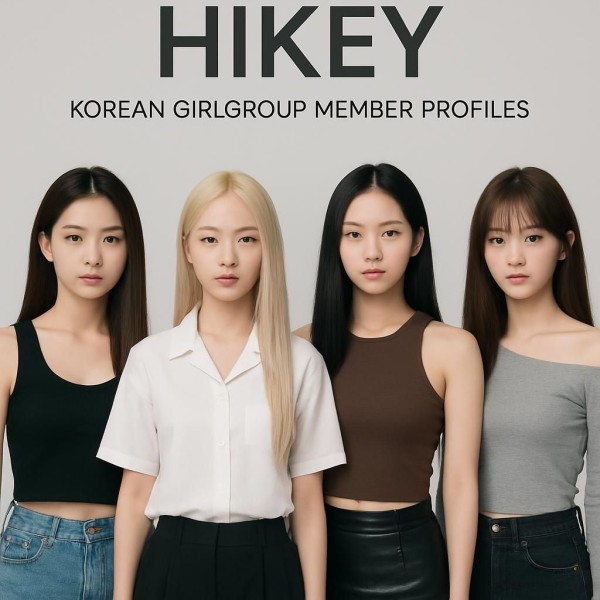
Editorial Note: Context and Craft
In an industry often measured by viral moments, 하이키 cultivates a quieter, craft-forward approach. Their release cycles, styling choices, and the dramaturgy of their live sets emphasize cohesion over flash. This profile set pays attention to those subtleties: the moments between choreography counts, the breath before a climactic note, the way one member's glance can redirect an entire phrase.
Consider this piece a curator's note — an entry point into how a modern 한국의 걸그룹 can balance commercial momentum with artistic texture.
Profiles: Roles, Resonances, and Stage Identities
The Leader — Curator of Momentum
The leader anchors tempo and morale. Her presence is economical: a lowered gaze before a cue, an index finger that resets focus. Musically, she prefers mid-register phrasing that stitches verses together and lends continuity to the group's dynamics. Offstage she assumes the role of translator — between creative departments, rehearsal rooms, and the delicate social architecture that keeps the team cohesive.
Main Vocalist — The Emotional Compass
This is the voice that commands the climactic arc. With a controlled vibrato and an instinct for micro-inflection, the main vocalist turns hooks into lived moments. She is often the focal point in cinematic arrangements — the cool eye of a storm of synths and percussion — and her phrasing often dictates the emotional intelligence of a track.
Main Dancer — Kinetic Architect
Movement here is grammar. The main dancer translates rhythm into silhouette and gives choreography its narrative clarity. Technique is married to intent: isolations that read like punctuation marks, group formations that tell a story without words. When the lighting narrows, it is the dancer's silhouette that often becomes the shorthand for the song's personality.
Main Rapper — Texture and Edge
The rapper is the group's sonic contrast: staccato cadence, internal rhyme, and a timbral edge that punctuates choruses. Her sections are often strategic breaks that reframe the song's momentum and provide narrative perspective. In interviews, she speaks in quick, direct sentences; on stage, her delivery is physical, almost sculptural.
Lead Vocalist / Visual — The Facet of Image
Part ambassador, part aesthetic engine, this member balances front-facing imagery with vocal responsibility. She often appears in concept shoots and brand campaigns, translating the group's identity into a visual language. Musically, she fills in the melodic textures — harmonies, ad-libs, and the colorations that enhance a chorus.
Lead Rapper / Songwriter — The Narrative Hand
When members contribute to songwriting, the group's voice acquires an additional intimacy. The lead rapper who co-writes imports personal narrative into verses and gives the music a diaristic quality. Her lines often feel like annotations: small, candid moments that deepen the listener's connection.
Maknae — The Bright Edge
The youngest member often brings spontaneity: an unpredictable line read, a burst of laughter in a behind-the-scenes clip, the kind of energy that softens more studied moments. Musically, the maknae frequently occupies the sparkling top notes and serves as a foil that highlights the group's depth.
Music, Styling, and Creative Direction
하이키's sonic palette negotiates between lush retro instrumentation and thin, modern synths. Their arrangements leave room for instrumental breaths and vocal ornamentation. The styling echoes that same sensibility: silhouettes referencing late 20th-century tailoring, color blocks that sit beside experimental textures, and accessories that read like punctuation rather than flourish.
The group's creative direction manifests as a disciplined collage: each music video or photoshoot becomes an exercise in pairing sound with a visual thesis. In live settings, costume changes are not merely aesthetic but dramaturgical — a way to signal tonal shifts within the setlist.
Performance Rituals and Stagecraft
Rituals matter in a group where split-second coordination determines impression. Pre-show routines include calibrated vocal warm-ups, synchronized breathing for complex choreographies, and micro-rehearsals of transitional cues. These preparations translate to an effortless stage persona, a deceptively casual sheen that is in fact the result of meticulous practice.
Their stagecraft relies on negative space as much as on movement: pauses are engineered for effect, and lighting cues are used strategically to isolate members or dissolve the group into unified motion.
Cultural Footprint
As part of the larger tapestry of 한국의 걸그룹, 하이키 participates in a conversation about gender, performance, and globalization. Their visual strategies borrow from local fashion legacies while remaining conversant with international trends — a hybrid language that allows them to tour, collaborate, and translate cultural references for diverse audiences.
Notable Releases & Listening Guide
For new listeners, start with a single that captures the group's structural tendencies: songs where the harmony supports a peak vocal moment and a rap section recontextualizes the chorus. Alternate with B-sides that reveal subtler textures — acoustic takes, stripped-down demos, or remixes that emphasize rhythm over melody. These contrasts illuminate the group's range and reveal the intentionality behind their public image.
Consider pairing live performance videos with studio tracks to appreciate the variance between arranged sound and the kinetic reality of stage delivery.
Style Notes for Fans and Collaborators
Collaborators should approach 하이키 with an appreciation for restraint. Proposals that allow for sonic space and visual coherence tend to resonate best. For fans, look for behind-the-scenes footage where creative decisions are discussed — these glimpses often reveal the conceptual reasoning that underpins finished works.
The group's identity thrives in collaboration: producers who suggest conceptual frameworks, stylists who think in shapes and textures, and visual directors who treat music videos as short films rather than promotional clips.
A Few Closing Observations
하이키 exemplifies how contemporary Korean girl groups synthesize performance disciplines into a singular identity. They craft moments of intimacy inside large arenas, and their creative choices are as much about what they omit as what they amplify. This restraint is often their greatest strength: it leaves room for listeners to bring their own stories into the music.
Summary (요약)
하이키는 무대 위의 완급 조절과 시각적 통일성을 통해 한국의 걸그룹 영역에서 독자적인 목소리를 만들어가고 있다. 리더의 균형감, 메인 보컬의 감정 표현력, 메인 댄서의 움직임 설계, 래퍼의 텍스처는 함께 결합되어 곡의 구조와 퍼포먼스를 완성한다. 스타일과 퍼포먼스는 상호보완적이며, 협업과 장르 간 교차를 통해 지속적으로 진화하는 것이 이들의 핵심이다.
댓글목록0